
September 22, 2026 · 3 min read
Green screen or blue screen
The choice is not about which pulls a better key. It is about what your subject is wearing, what is in their hair, and how much light you have.
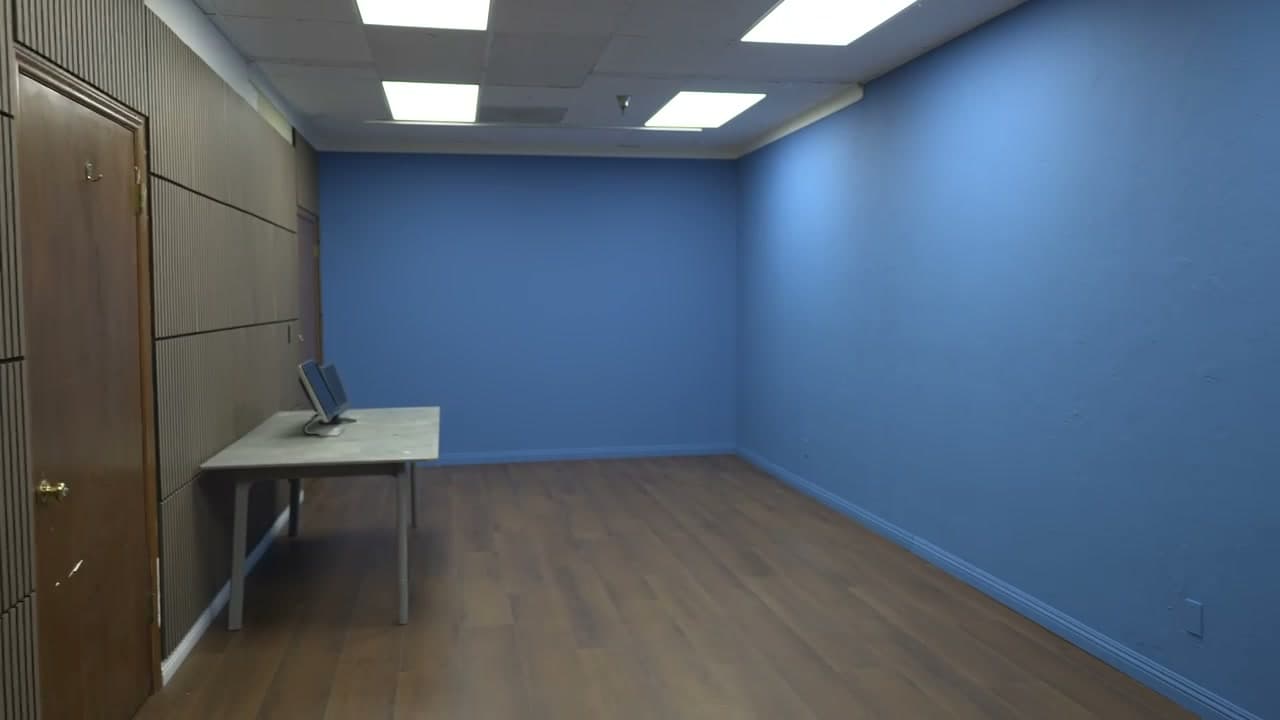
Most people arrive having already decided on green, because green is what they have seen. It is the right answer more often than not. But it is not the right answer always, and the times it is wrong are expensive to discover on the day.
The choice comes down to three questions, and none of them is "which color keys better".
What is your subject wearing?
A key works by isolating one color and removing it. Anything in frame that shares that color goes with it.
Green is a problem for foliage, for olive and khaki, for a lot of denim under tungsten, and for the particular yellow-green that turns up in high-visibility workwear. Blue is a problem for denim proper, for navy tailoring, for most corporate uniforms, and for eyes — pale blue eyes against a blue screen will fight you in a close-up.
This is the question to ask first, because it is the only one with a hard answer. Put the wardrobe next to the wall in your head. If any of it disappears, that is your color ruled out.
How much light do you have?
Green is roughly twice as bright as blue to a digital sensor. Most cameras allocate more of their color information to green than to anything else, which is why a green key holds up better when the light is thin and why green is the default on a tight schedule.
Blue needs more light to give you the same clean separation. On a well-lit stage with time to rig, that is not a problem. On a fast turnaround with two heads and an hour, it is.
If you are shooting on a small sensor, or in log at a high ISO, or you simply do not have the fixtures, green will be more forgiving.
What is the shot?
Green spills green. Blue spills blue. The difference is what the spill does to skin.
Green spill on a face reads as illness — it is the wrong direction from every skin tone, and the correction pulls magenta into the shadows. Blue spill reads as cool light, which is a thing that happens in the world. Night exteriors, moonlight, a window. A blue screen forgives a little contamination in a way a green one does not.
That is why blue is still standard for a lot of feature work, and why a beauty-led close-up is often better on blue even when green would technically key more cleanly.
The answer most of the time
Green, if you are shooting during the day, your subject is in colors that are not green, and you want the most forgiving key for the light you have.
Blue, if there is green in the wardrobe or the set dressing, if the shot is meant to be cool or nocturnal, or if you are working close on skin and cannot afford the spill.
If both would work, take green. You will spend less light on it.
What you can control on the day
Whichever you choose, the thing that ruins keys is not the color. It is distance and evenness.
Get your subject as far off the wall as the room allows — spill falls away fast, and ten feet does more for a key than any amount of grading. Light the wall separately from the subject, and light it flat: a stop of variation across the surface is a key that has to be pulled in pieces.
A cyc helps with both, because there is no corner to catch a shadow and usually more depth to work with. That is a separate argument, and we have made it elsewhere.
If you are still not sure
Bring the wardrobe in and put it against the wall before you commit. Ten minutes of that on a scout is worth more than any rule of thumb, including this one.
Written by Seven Film Studios · craft, stages